 0
0
 6 July 2026, 1:56:00 pm AEST
 5 min
5 min

 0
6 July 2026, 1:56:00 pm AEST
5 min
0
6 July 2026, 1:56:00 pm AEST
5 min

Look—we've all been there. It’s 11 PM on a Thursday at the end of the quarter, and you’re staring at an inbox full of ad-hoc data requests.
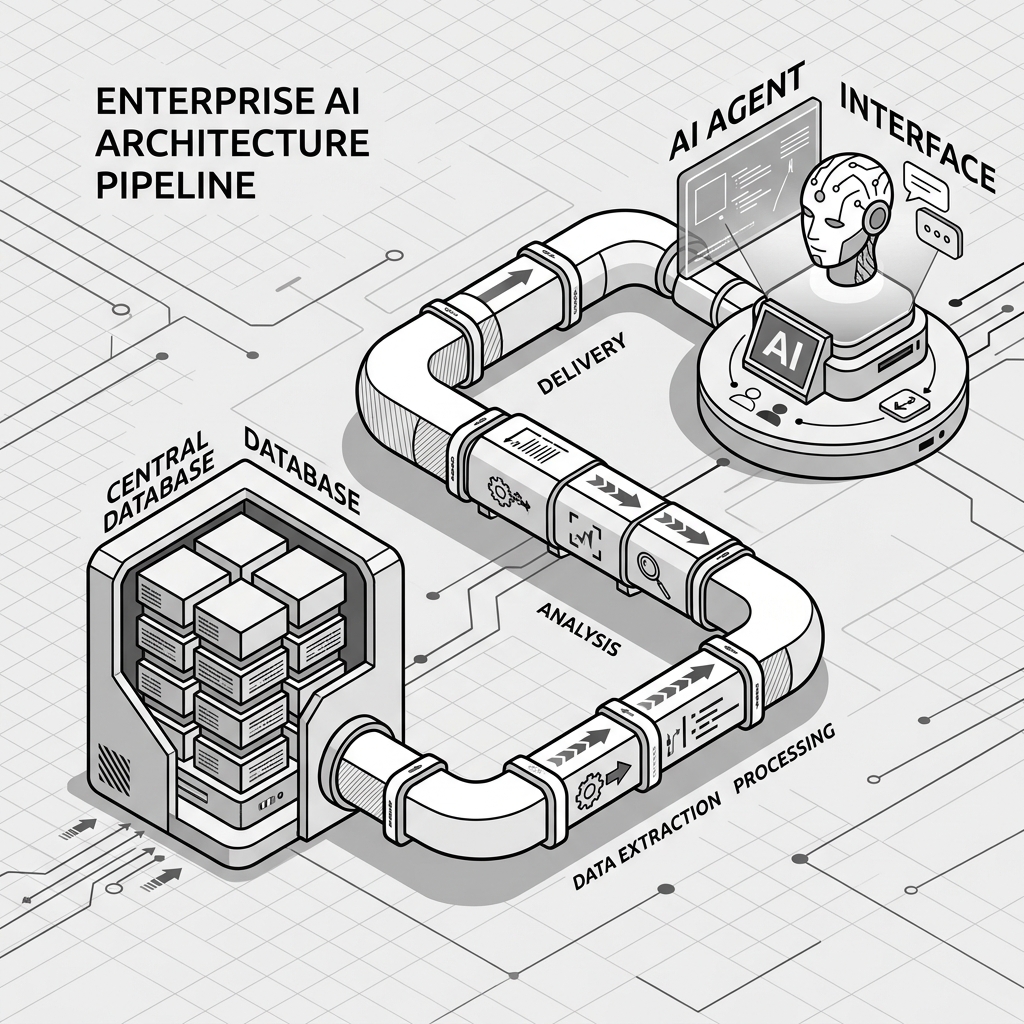
Look—we've all been there. It’s 11 PM on a Thursday at the end of the quarter, and you’re staring at an inbox full of ad-hoc data requests.
The VP of Sales wants a hyper-specific variance report for the APAC region, excluding two specific product lines. The Operations Director needs to know exactly how a 4% raw material cost increase cascades through the Q4 multi-level BOM forecast. The CEO is texting you about gross margin impacts if a new tariff hits tomorrow morning.
You recently migrated the company to IBM Planning Analytics (TM1). You did the hard work. The calculation engine is blazing fast. The data is finally clean. The single source of truth is established. And yet—because you and maybe two other people on your team are the only ones who truly know how to navigate the complex MDX queries, manage the cube views, and slice the multi-dimensional architecture—you are still manually fetching data for the rest of the business.
Dashboards are a massive step up from fragmented spreadsheets, but they still require users to know exactly what filters to pull and where to look. If we are being completely honest, most business leaders just want to ask a question in plain English and get a number.
This is exactly where IBM watsonx Orchestrate comes in. It doesn't replace the TM1 architecture you just bled to build—it fundamentally changes how the rest of the business talks to it.
We spend a lot of time talking about "AI" in finance, which usually leads to a lot of exhausting hype about machines "understanding" market trends or "predicting" the future with zero human input. Let's ground this in reality.
When you integrate watsonx Orchestrate with IBM Planning Analytics, you aren't unleashing a sentient forecasting wizard. You are deploying a highly efficient, deterministic data retrieval agent.
Instead of waiting for your financial analysts to build a custom view, a sales director can simply open a chat interface and type: "Retrieve the Q3 variance report for APAC, excluding Product A and B."
Behind the scenes, watsonx Orchestrate parses that plain English request and maps the intent directly to your underlying TM1 data models. It recognizes "Q3" as the Time dimension, "APAC" as the Region dimension, and identifies the exclusions to structure the exact MDX query required. It instantly retrieves the specific data slice and formats it into a clean table or chart within seconds.
It’s not "thinking"—it is rapidly translating natural language into actionable queries against your validated TM1 cubes.
The true value of this integration becomes incredibly obvious when you scale out of standard financial reporting and into Sales & Operations Planning (S&OP).
Imagine your supply chain team needs to run a scenario on a sudden 15% tariff applied to a specific sub-component used across 40 different finished goods. In a legacy environment, an analyst would have to manually trace that component through the multi-level Bill of Materials (BOM), adjust the cost drivers, recalculate the margins, and export a new report.
With watsonx layered over TM1, the Operations Director simply prompts the agent: "Simulate a 15% cost increase on Component X and show the margin impact across all finished goods for Q4."
The agent doesn't perform the math—it leverages TM1's existing, highly optimized calculation engine to run the simulation, then simply surfaces the resulting data back to the user. This drops the turnaround time for complex scenario planning from hours to seconds, allowing business units to react to supply chain shocks in real-time.
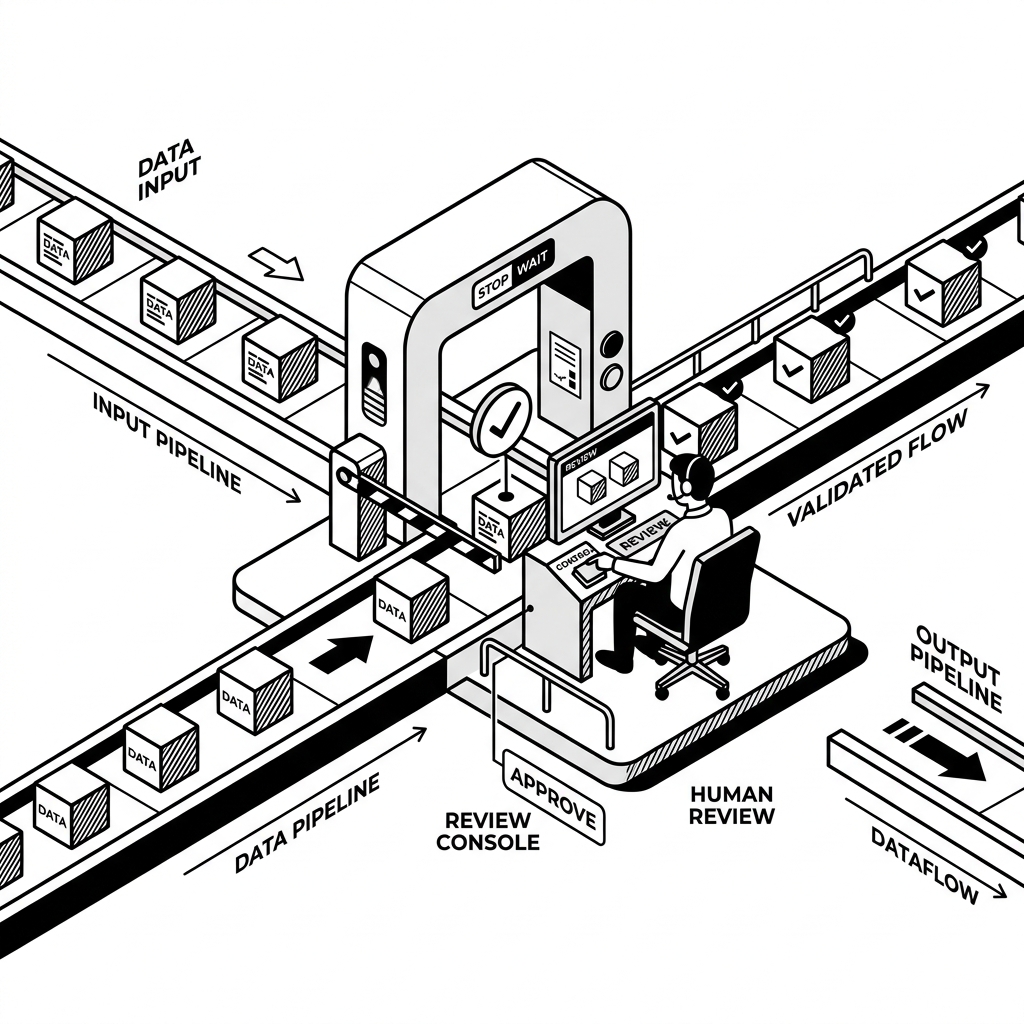
The immediate reaction from any CFO hearing about AI pulling financial data is usually a hard pause. And honestly, it should be. The fear of AI hallucinations—where an algorithm confidently presents incorrect numbers—is a legitimate, terrifying risk in enterprise finance.
This is why the architecture of watsonx layered over TM1 is so critical. The agent is not running rogue generative math. It strictly queries the TM1 REST API. The agent itself has no autonomous database rights; it inherits the exact cell-level security profile of the user making the request via JWT authentication. If a regional manager asks for global salary data they aren't permitted to see, the TM1 security model hard-blocks the request at the cube level, regardless of the prompt.
Furthermore, you can enforce strict human-in-the-loop workflows for any write-back operations. If a department head asks the agent to draft a complex reconciliation journal based on recent variance, the agent prepares the data and structures the entry, but it cannot commit to the base data. Instead, it writes the proposed entry into a private TM1 sandbox (a temporary, isolated slice of the cube) and enters an "execution pause" state.
It then routes the pre-populated entry to a human controller. The system provides a full audit trail—displaying the exact natural language prompt alongside the deterministic MDX query that executed the data pull—so the reviewer knows exactly how the numbers were derived. The system does 90% of the heavy lifting, but the final 10%—the actual execution and approval—remains entirely in human hands.
Let's talk about the cultural reality of running a modern finance team. For years, we’ve hired brilliant financial analysts, promised them they’d be doing strategic forecasting, and then immediately sat them in front of Excel to manually reconcile cost centers for three weeks out of every month.
We call it the "Spreadsheet Trap." When a sudden 15% tariff hits, or a competitor slashes prices, the business turns to finance for answers. But because the data is trapped in manual reporting silos, the immediate reaction isn't strategy—it's a three-day scramble to simply compile the numbers. Your team is working through the weekend not to analyze the data, but just to fetch it.
This breaks teams. It burns out your best talent. They didn't get their MBAs to become manual query-routers.
When you layer watsonx over TM1, the technical efficiency is great, but the cultural transformation is the actual ROI. When you can confidently offload 15 hours of manual, ad-hoc data queries every week to a natural language agent, the posture of the entire finance department fundamentally shifts.
I've seen this happen firsthand. The moment a team realizes they no longer have to spend Friday night translating a regional manager's vague email into an MDX query, the anxiety drops. The conversation changes from "whose spreadsheet has the right numbers?" to "what should we do about these numbers?"
You stop being the exhausted data-fetchers, and you finally start acting as the proactive, business-steering advisors you were hired to be. You built the TM1 foundation to end the chaos. Deploying an AI agent on top of it ensures you never have to go back to being the company's manual data-router.
.png)
Subject-matter specialist at Octane Solutions, helping Australian enterprise finance teams optimize planning, analytics, and automation.
 print
print


Leave a comment