Content_Cut_Icon Twitter_Brands_Icon

Gartner Finance & Accounting Symposium · Hilton Sydney March 2026

Mode_Comment_Icon_white0
Alarm_Icon_1_white11 min

When the Room Agrees: AI is Reshaping Finance — But Only If Your Foundation is Ready There are conferences where you hear ideas you've never encountered before. And there are conferences where the room puts language to things you've been seeing in practice — where the conversations happening on stage mirror almost exactly what you've been building with clients behind the scenes. Today's Gartner ...
down-arrow-blue
Book_Open_Solid_Icon

When the Room Agrees: 
AI is Reshaping Finance — But Only If Your Foundation is Ready 

20260324_110209


There are conferences where you hear ideas you've never encountered before. And there are conferences where the room puts language to things you've been seeing in practice — where the conversations happening on stage mirror almost exactly what you've been building with clients behind the scenes.

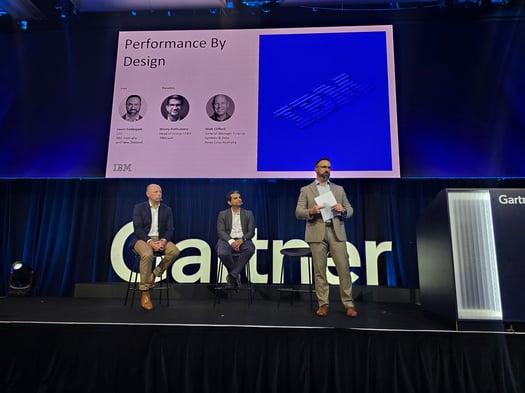
Today's Gartner Finance & Accounting Symposium in Sydney was firmly the latter. I attended a standout panel session that brought together three of the sharpest finance leaders in the room: Matt Clifford, GM Finance Systems & Data at News Corp Australia, Winny Puthussery, Head of Group FP&A at Metcash, and moderated with precision by Jason Codespoti, CFO at IBM Australia.

The topic was AI and the future of finance. But the conversation that unfolded went far deeper — into culture, data architecture, transformation sequencing, and what the finance function actually looks like in 2030. What made it particularly resonant for us at Octane: all three organisations on stage are running IBM Planning Analytics (TM1) as their planning and forecasting platform.

This post captures the key themes from the session — and connects them to the work we've been doing with News Corp on their own Planning Analytics modernisation journey.

"It wasn't the technology that held us back. It was our data. We had to go back and rearchitect from the data layer up."

— Matt Clifford, GM Finance Systems & Data, News Corp Australia · Gartner Finance Symposium 2026

Volatility Is No Longer an Event — It's the Operating Environment 

Winny opened with a line that drew knowing laughter across the room: he'd already run 15 budget scenarios that week. It was Tuesday.

It landed because every finance leader in that auditorium recognised the feeling. The panel's first theme was clear: the nature of financial planning has fundamentally changed. The question finance teams are now being asked is no longer "what happened last month?" It's "what happens if I change X — and simultaneously, what happens if I change Y?"

This shift from retrospective reporting to real-time, forward-looking scenario analysis isn't a trend — it's the new baseline. And it has enormous implications for both the tools finance teams use and the processes they build around them.

AI Is Delivering Real Value — But Only in Two Clearly Defined Lanes

The panel cut through the AI hype quickly. Winny framed it well: there are two distinct buckets of AI value in finance right now, and conflating them is a source of a lot of frustration.

The Two Lanes of AI Value in Finance

  • Lane 1 — Ready Now: Personal productivity tools that any finance professional can use today. Research preparation, meeting briefs, summarisation, and first-draft analysis. No technical dependency. Immediate, measurable time savings. When multiplied across a team of 10–20, the impact is significant.

  • Lane 2 — Foundation Required: The larger prize — connected forecasting, automated variance analysis, AI-driven scenario modelling — but only accessible once your data is structured, governed, and connected across systems. This is where the hard yards are. And this is where most organisations are still working.

Matt's point on Lane 2 was the most candid moment of the session. News Corp had early, ambitious AI use cases ready to deploy — but when they tried to turn them on at scale, the platform wasn't what held them back. It was the data. The structure, the shape, and the care given to that data over the years hadn't been sufficient to make it consumable by AI. The response: a deliberate rearchitecting of the data layer from the ground up.

This is something we see consistently across enterprise planning environments. The TM1 platform is rarely the constraint. It's the state of the data beneath it.

The News Corp Story: From Legacy TM1 to AI-Ready Planning

Matt's contribution to this panel carried real weight because it wasn't theoretical. News Corp has been on a live modernisation journey — and Octane has been privileged to be part of it.

The challenge News Corp faced isn't uncommon. A large, complex media organisation — multiple mastheads, traditional print alongside digital, broadcast assets — each with their own planning models, data structures, and forecasting rhythms. The legacy TM1 environment had served them, but it had grown organically over time. Connecting it, governing it, and making it ready for the next generation of AI-driven finance capability required a deliberate platform investment.

35–40 Hours saved per reporting cycle post-modernisation

5–10× Force multiplier on FP&A team capacity with AI orchestration

3 → 1 Planning platforms consolidated onto IBM PA

What the modernisation unlocked wasn't just faster reporting — it was the ability to shift the finance team's focus. Instead of spending the majority of their time moving and formatting data, analysts could direct their energy toward the strategic analysis and scenario modelling that actually drives business decisions.

As Matt described on stage, the goal for News Corp's planning function isn't just automation — it's enabling one person to coordinate work that previously required many. Agents are doing multiple jobs in parallel. The human role is shifting from data handler to decision architect.

"We now have the opportunity to have one person coordinating, where we used to have many. AI gives us that scale multiplier — but only if the platform beneath it is solid.

Matt Clifford, GM Finance Systems & Data, News Corp Australia · Gartner Finance Symposium 2026

Data Is Finally Being Treated Like the Asset It Always Was

One of the most striking observations from Winny Puthussery was about a structural shift in how organisations view data. He noted that Metcash recently combined its data and AI roles into a single Chief Data and AI Officer position a clear signal that the two disciplines are inseparable.

The reason is straightforward: AI is only as intelligent as the data it operates on. You can deploy the most sophisticated planning and forecasting AI available, but if your data lives in silos, lacks governance, or hasn't been structured with cross-system connection in mind, the AI will surface that fragility immediately.

For Planning Analytics environments specifically, this means the investment in data architecture, model design, and dimension hygiene that might once have felt like internal IT housekeeping is now a direct enabler of competitive advantage. The organisations getting the most value from their TM1 environments today are the ones that treated data quality as a strategic priority before AI arrived at the door.

Sequencing Transformation: Why Quick Wins Win

The panel was unanimous on the transformation strategy. The days of the two-year ERP-style rollout are over, not just because the pace of change makes them obsolete, but because organisations that wait that long are already 18 months out of date by the time they go live.

Matt's framing was practical and repeatable: identify the highest-value use cases, execute them well, demonstrate ROI, build trust, and roll that credibility into the next project. This incremental approach isn't a compromise;  it's the methodology that actually sticks because it creates internal champions at every stage.

The Transformation Sequencing Principles — As Heard on Stage

  • Pick use cases where the win is visible, and the value is unambiguous — workforce planning, forecast cycle time, reporting automation

  • Invest in the people who know your business and make them owners of the change — not passengers through it

  • Frame AI as a force multiplier, not a cost-cutting exercise. If your team can do 5–10× more, the ROI conversation changes entirely

  • Stabilise before you modernise — a well-governed, performant foundation is the prerequisite for everything that comes next

  • Don't wait for perfection. The tools are improving month by month. Start with what you can manage, and grow from there

The Culture Shift Is the Real Transformation

Perhaps the most important conversation of the session wasn't about technology at all. It was about people.

Both Matt and Winny acknowledged that the emotional reality of AI in finance — the nervousness, the questions about job security — can't be glossed over. It has to be addressed directly, because that baseline concern is the barrier to even having the conversation about what's possible.

The reframe that resonated most: right now, many highly skilled finance professionals spend 80% of their time moving data around and 20% doing the strategic work they were trained and hired to do. AI inverts that ratio. And when finance teams start experiencing that inversion — when they find themselves spending their day on scenario analysis, business partnering, and strategic insight rather than data gymnastics — the culture shifts naturally.

Jason closed the session with a line worth repeating: "Treat AI as a partner, not a threat. The people who do that well will define the next era of finance leadership."

What Finance Looks Like in 2030

The panel's closing question asked each participant to look five years ahead. The picture that emerged was consistent across all three voices.

Finance becomes the decision-making backbone of the organisation. Not the back office. Not the reporting function. The team that spends almost no time on data preparation and almost all their time providing the scenario analysis, risk modelling, and strategic input that underpins major business decisions.

The path to that outcome isn't mysterious. It runs through a modern, well-governed planning platform. Connected data. An AI layer that can operate with trust and explainability. And a team that has been developed to be business partners first, data operators second.

For organisations running IBM Planning Analytics (TM1), the foundation is already there. The question is whether it's been built, maintained, and evolved in a way that makes it ready to carry that future.

 Is Your Planning Analytics Environment AI-Ready? 

We help finance teams modernise their IBM Planning Analytics / TM1 environments and build the data and platform foundations needed to leverage AI at scale. If you'd like to discuss where your environment sits and what the path forward looks like, we'd welcome the conversation.

Leave a comment

Line

Octane 2025 Year in Review: What a Ride

Mode_Comment_Icon_black0
Alarm_Icon_113 min

Hello Octane clients, partners, and friends — and hello to our own Octane crew reading this too.

As we wrap up 2025, we wanted to share a year-in-review that’s equal parts thank you, celebration, and “wait… did we really do all that?” 😄

This year was big. Big learning, big delivery, big growth, big laughs, and a few late nights fuelled by coffee, deadlines, and the occasional “just one more slide” moment.

So here it is: the story of Octane 2025 — what we achieved, what we built, and why we’re genuinely pumped about what’s coming next.

🏆 Awards, Recognition, and Some Serious Global Moments

  • Let’s start with a pinch-us section.

Boston: IBM AI Awards

  • In 2025, Octane was recognised at the IBM AI Awards in Boston at IBM THINK for our work with Watson Orchestrate — a huge moment for our team and a major validation that our approach to practical, enterprise AI is the real deal.
  • It wasn’t just a trophy moment. It was the feeling of:
    “We’re not just talking about AI — we’re doing it, delivering it, and getting recognised for it.”

Vietnam: IBM Partner Plus Award (APAC)

  • Then we headed to Vietnam for IBM’s APAC ecosystem gathering and came home with another major win — the IBM Partner Plus Award for SaaS (APAC).

  • What we loved most about this one is that it recognised outcomes: real transformation work, real client results, and consistent execution.

Orlando: IBM TechXchange Excellence Awards – Runner-Up

  • And yes… Orlando too. At IBM TechXchange 2025, Octane was named Runner-Up in the IBM TechXchange Excellence Awards.

  • Runner-up might sound modest, but trust us: on a global stage with the best of the best, it’s a massive achievement. It’s one of those moments where you quietly sit back and go,

    “Okay… we’re in the game globally.” 

Orlando Highlight: Presenting with News Corp (Real Story. Real Results.)

  • One of the proudest moments of the year: at IBM TechXchange in Orlando, Octane presented on stage with our client News Corp.
  • This wasn’t a fluffy “look at our product” session. It was a proper transformation story about how we modernised a complex IBM Planning Analytics (TM1) platform — including:

  • Modern architecture and platform uplift

  • Model refactoring and performance focus

  • A foundation that’s now AI-ready

  • Reducing technical debt and improving user experience

  • Making the planning platform faster, more scalable, and actually enjoyable to use (yes, that’s possible)

  • Presenting alongside a client is the best kind of proof. Anyone can claim value — it’s different when your client stands with you and says,

    “Yep. They delivered.”

One Team, One Family: Our Bangalore all Octane Meetup (and Mini-Meets)

  • 2025 wasn’t just about client delivery and awards — it was also about us investing in the thing that makes Octane work: our people.

  • We held an All-Octane Meetup in Bangalore, bringing team members together from different cities and countries. For a globally distributed team, this stuff matters. It turns “workmates on Teams” into “people you can actually laugh with in real life”.

  • The week was a mix of:

  • Strategy sessions

  • Training and capability building

  • Sharing wins and lessons from the trenches

  • And a healthy amount of good food, banter, and team energy

  • We also had smaller mini-meets in Sydney, Mumbai, Gurugram and Hyderabad throughout the year — quick catch-ups, planning sessions, hiring and training meetups — the kind of moments that keep a team connected even as we grow.

CFO Events and Conferences: Melbourne, Sydney, Mumbai

  • If 2025 had a theme in the market, it was this:
    CFOs are done with hype. They want what works.

  • So we leaned in — showing finance leaders how to modernise planning, reduce manual work, and actually take advantage of AI without risking governance, security, or sanity.

  • Across Melbourne, Sydney, and Mumbai, we participated in and hosted CFO-focused events, roundtables, and conference sessions where we covered topics like:

  • Modern FP&A and scenario modelling

  • Planning Analytics as a modern platform (not a “legacy TM1 box”)

  • AI for finance that’s practical, safe, and measurable

  • Agentic AI / orchestration and “digital labour”

  • Improving month-end processes and board reporting

  • What we loved most: the conversations were real. No buzzword bingo. Just finance leaders asking,
    “How do we do this properly?”
    …and Octane being able to answer with real experience and real examples.

New Clients + Big Transformations

  • We onboarded new clients this year and kicked off major transformation programs — across multiple industries and multiple countries.

  • Some of the work our team has been delivering:

  • Modernising IBM Planning Analytics platforms (on-prem → cloud / SaaS)

  • Rebuilding planning models to reduce complexity and improve adoption

  • Improving performance and governance for enterprise TM1 estates

  • Automating finance workflows and reporting

  • Building AI-ready foundations so clients can scale innovation safely

  • The common thread across these programs was simple:
    Less manual work, faster insight, better decisions.

  • And as always, we aim for outcomes clients can feel — not just “a system upgrade”, but a real change in how finance operates day to day. 

Building Our AI Practice: From “Interesting” to “Implemented”

  • 2025 was also the year our AI practice really took shape.

  • We’ve been talking about AI for a while (like everyone), but this year we focused on turning AI into:

  • Usable workflows

  • Secure and governed solutions

  • Real productivity improvements

  • Practical agents that operate inside enterprise environments

  • We built capability, grew the team, and expanded how we deliver solutions across IBM’s AI stack — especially around orchestration and automation.

  • For clients, this means AI that supports finance teams without creating chaos. And for our own internal team, it means we’re building a long-term competitive advantage — not chasing trends.

Octane Blue: Expanding TM1 Support (and Making Support Actually… Enjoyable?)

  • Our Octane Blue TM1 support services also grew significantly in 2025.

  • Support isn’t glamorous… until you realise what it really means for clients:

  • Your planning platform stays stable

  • Your users get answers quickly

  • Your changes don’t break everything

  • Your month-end isn’t derailed by a mystery data issue

  • You don’t have to scramble for talent every time something needs fixing

  • Octane Blue has become a key part of how we help clients keep their platforms healthy and continuously improving — not just “keeping the lights on”, but actively modernising over time.

  • If 2025 proved anything, it’s this: great support is a growth strategy, not an afterthought.

Community & Sponsorships: The Fun Side of Octane

  • Now for the section we love because it shows who we are outside of spreadsheets and cloud architecture 😄

  • In 2025, Octane also sponsored and supported:

NSW Motorkhana Series

  • We supported the NSW Motorkhana Series — because motorsport is part of our DNA and because there’s something magic about grassroots competition, learning, and pushing yourself.

🧒 WRX Car Club Junior Series

  • We also sponsored the WRX Car Club Junior Series, supporting young drivers and helping build confidence, skills, and community. It’s a big deal seeing juniors step up and improve — and it aligns perfectly with how we think about growth (in sport and in careers).

🏸 Squash Tournament Sponsorship

  • And yes — we also sponsored a squash tournament this year. Different arena, same energy. We love supporting community sport because it’s about participation, discipline, health, and momentum.

  • These sponsorships aren’t just marketing. They’re personal. They reflect our culture:
    teamwork, improvement, friendly competition, and backing good people doing good things.

What 2025 Really Says About Octane

  • If we zoom out, 2025 wasn’t about one award or one project. It was about momentum.

  • It showed that Octane is:

  • Building global credibility (India, Boston, Vietnam, Orlando)

  • Delivering real transformation outcomes (not just implementations)

  • Expanding capability into AI and automation

  • Growing managed services (Octane Blue) with real depth

  • Investing in culture, team connection, and community

  • In simple terms:
    we’re growing up — but we’re keeping our personality.

🔮 2026: Bigger, Smarter, and More Impactful

  • Now the fun part: what’s next.

  • In 2026, the market will shift from “AI curiosity” to AI accountability. People won’t ask “what can it do?” — they’ll ask:
    “What results did it deliver?”

  • Our focus for 2026 is clear:

  • More measurable outcomes: less talk, more value

  • More AI that’s safe and practical: governed, secure, enterprise-ready

  • More platform modernisation: moving legacy environments to modern architectures

  • More client enablement: helping teams adopt and sustain change

  • More investment in our people: training, growth paths, and more meetups

  • We’re entering 2026 with confidence, momentum, and a bigger mission:
    help finance teams run faster, smarter, and with less friction.

A Big Thank You (From All of Us)

  • To our clients and partners: thank you for trusting Octane in 2025. Whether it was a major transformation program, support partnership, or a new engagement — we truly appreciate the opportunity.

  • To our team: thank you for the energy, the resilience, the late nights, the laughs, and the care you bring to every client outcome.

  • 2025 was a massive year.
    2026 is going to be even bigger.

  • From all of us at Octane — have an awesome holiday season, stay safe, recharge properly… and we’ll see you in 2026 ready to hit the ground running. 🎉

    – Amendra & the Octane Team


Line

Agents AI: The Next Leap in Enterprise Automation Powered by IBM WatsonX Orchestrate

Mode_Comment_Icon_black0
Alarm_Icon_110 min

In the last few months, the tech world has been buzzing with one phrase — Agentic AI. 
From Stanford’s AI labs to Fortune 500 boardrooms, we’re seeing a powerful shift in how artificial intelligence is perceived and applied. 

Until now, AI has been largely reactive — it answered questions, summarised text, generated images or code. 
But Agentic AI takes a bold step forward. It doesn’t just respond — it acts. 

What Exactly Is Agentic AI? 

Think of Agentic AI as a system that can understand a goal, plan a route, and execute tasks autonomously almost like a digital teammate that thinks, collaborates, and delivers outcomes without waiting for line-by-line instructions. 

Instead of relying on static workflows or pre-defined scripts, Agentic AI agents: 

  1. Plan their own actions based on context 

  1. Collaborate with other agents or apps 

  1. Adapt to changes mid-execution 

  1. And most importantly, learn from outcomes to improve the next run 

It’s automation that thinks. 

What Exactly Is Agentic AI? 

Every organisation is flooded with tools, dashboards, and systems — yet, productivity often remains locked behind repetitive manual actions: approvals, report refreshes, email follow-ups, reconciliations, HR queries… 

Agentic AI changes that equation. 
It creates a layer of intelligent autonomy on top of existing systems. 

For example — 

  1. In HR, an agent can draft and send onboarding emails, create system access tickets, and schedule training sessions — all triggered by one hire event. 

  1. In Finance, an agent can reconcile accounts, generate exception reports, and even summarise insights for leadership reviews. 

  1. In Operations, field-attendance updates can trigger automatic payroll adjustments or rescheduling through integrated workflows. 

These aren’t isolated bots. They are collaborating digital agents, working just like teams do — only faster, consistent, and 24x7. 

Watsonx Orchestrate: IBM’s Approach to Agentic AI 

While several players are entering the “agentic” space, IBM’s Watsonx Orchestrate brings a distinct advantage — enterprise-grade orchestration backed by responsible AI governance. 

Watsonx Orchestrate isn’t just another automation tool. It’s a platform that lets you build, deploy, and manage AI agents that can connect across: 

  1. Microsoft 365 (Outlook, Teams, SharePoint) 

  1. ERP & HRMS systems 

  1. Collaboration tools like Slack or Asana 

  1. and even custom APIs within your enterprise stack. 

Each agent can perform discrete actions — such as “summarise this email thread,” “update this record,” or “generate monthly KPI report” — and Watsonx Orchestrate links them intelligently into full, end-to-end workflows. 

And the best part? It’s human-in-the-loop by design — meaning you stay in control while AI does the heavy lifting. 

Why This Resonates with Modern Enterprises 

Agentic AI, powered by WatsonX Orchestrate, is the bridge between automation and autonomy. 

It helps organisations: 

  1. Scale efficiency without scaling headcount. 

  2. Break silos between systems and functions. 

  3. Reduce turnaround times for repetitive but high-frequency tasks. 

  4. Empower teams to focus on decisions, not execution.

  5. This isn’t just about “doing faster.” 

It’s about redefining how work gets done. 

My Perspective 

Having spent years working with enterprise analytics and performance management platforms, I see Agentic AI as the missing layer that connects insight to action. 

Tools like IBM Planning Analytics and Cognos give us the numbers and narratives — but it’s Agentic AI that can act on them: 

  • Trigger next-best actions based on performance thresholds, 
  • Coordinate inter-team responses, 
  • Or even build the first draft of management reports autonomously. 

It’s where analytics meets autonomy — and that’s where the next wave of enterprise productivity will come from.

Closing Thought 

Agentic AI is not a trend. It’s a fundamental evolution in how technology collaborates with humans. 

Enterprises that embrace this shift early — especially through platforms like IBM WatsonX Orchestrate — will move from automating tasks to orchestrating outcomes. 

And that, I believe, is where the real competitive edge lies. 

Line

Celebrating Five Fabulous Years for Octane Software Solutions

Mode_Comment_Icon_black0
Alarm_Icon_18 min

It’s an amazing feeling as we gear up to celebrate Octane’s 5th anniversary. What started as an idea and nurtured by me and my senior leaders is fast transforming into an established and growing enterprise.

Five years is usually a significant milestone in a startup’s life as it pushes you into a grown-up zone. It’s been an exciting journey and the pandemic indeed threw some curveballs at us.

From Macquarie to Octane

I am often asked about the motivation to resign from Macquarie Group to start Octane.

Macquarie was an excellent learning ground to nurture one’s entrepreneurial fire. I found a gap in the market to provide the latest AI-based technology to the Office of Finance. Some existing suppliers were either too expensive that meant the projects did not stack up against a cost/benefit analysis. Others simply did not have the skills or expertise to deliver complex Financial Projects.

My vision was to establish Octane as a specialist provider of Finance technology at a price point that allows for a wider adaptation. This was to be achieved using a hybrid onshore/offshore delivery and support.

I think we are keeping true to the vision and adjust and adapt due to market demands.

I must admit that the pandemic has validated our business model as the whole world adapted to remote working and sought out to optimise how they operate and a rapidly volatile environment.

Reflecting on some of the significant achievements of Octane over the last five years would be: 

  • Onshore/Offshore TM1 Delivery - We established skilled TM1 teams in Sydney and 4 Centres in India. Using a combined onshore/offshore delivery model, we were able to deliver projects and support TM1 models much quicker and cheaper than our peers as well as our internal teams. 

  • DataFusion - Over the years, we have developed and fine-tuned an API based connector into TM1. DataFusion allows TM1 data to be reported in other reporting tools like Power BI, Qlik and Tableau. 

  • TM1 Training - We launched our $99 training sessions for end-users. This has proven to be quite popular within the community. Typically, training cost thousands and can be difficult to find.
    We have simplified the whole process and offered great value for a low price. Obviously, this is a loss leader for us but has certainly opened up doors to a number of clients who saw the depth of our expertise via this training.
  • Octane Managed Services - Building upon our onshore/offshore capabilities and growing functionality, we now offer Octane Managed Service, which provides DevOps capabilities. This provides an easy to consume model and transparent pricing covering several tools and applications.
    This allows Finance teams to focus on what they do best and not be bogged down with trying to run a Software shop.

  • IBM Gold Partner Status - We were extremely proud to achieve our IBM Gold partner status in 2018. 
  • IBM Champion Status - I was personally awarded the status of IBM Champion in 2021.

  • Partnerships - As part of strengthening our offering to the Office of Finance, we have partnered with some of the most respected vendors: 
    • IBM - IBM is a giant in the industry. They have some of the most widely used software within Finance teams. They are leaders in integrated budgeting & forecasting, Statistical Analysis, Optimisation, Robotic Process Automation and of course, Watson for Artificial Intelligence. 
    • Blackline - Since being founded in 2001, BlackLine has become a leading provider of cloud software that automates and controls financial close and accounting processes.
    • MODLR - MODLR is a business modelling and collaborative planning software that provides everything needed to enable a connected financial planning process. 
    • QUBEdocs - QUBEdocs enhances Cognos TM1 and Planning Analytics by adding a new dimension of visibility and information governance. It delivers meaningful documentation of TM1 models. 
    • Other numerous partnerships we have with our peer companies around the globe to share information and resources.

Octane timeline & Milestone Chart

Octane timeline over the last five years.

Team Octane

The biggest shoutout goes to the team we have at Octane, who are absolute champions and masters of their domain.

We have always sought to foster and build up the skills of our people. While Covid has put a stop to our legendary quarterly team get-togethers in different locations, we have slowly started planning to work towards our next get-together in Goa when restrictions lift and we are all able to travel. 

It was amazing how our team got together as the effects of the pandemic were starting to be felt around the world. Being in a situation where we had our staff deployed to Dubai and Fiji, it was a mammoth effort and patience required to manoeuvre through lockdowns, quarantine and travel arrangements to get everyone back home safely.

As always, our main concern was the safety and welfare of our staff. During the pandemic, we have to provide different levels of support to our staff and their family as some of them were affected by the virus which has brought us closer together as a tight-knit team. 

Octane home officeWork from home office became the norm in 2020.

Over the last five years, we have had the opportunity to work with clients of sizes and shapes. It’s pleasing to note that the vast majority of them are with us for the long haul, and we have an ongoing relationship with them. We have always sought to ensure that my team and I go above and beyond to ensure client satisfaction.

It has become our DNA.   

Octane team-1Our get together with the Sydney Team before the pandemic. 

I am also appreciative of my family and their patience. Starting out and building something like Octane requires immense time, effort and energy. There have been almost monthly travels (pre-pandemic) and lots of late-night calls.

The silver lining in the last 18 months was that I was able to spend a lot more time at home, and we managed to get some long-standing projects off the ground. It also allowed me to compete and win the NSW WRX Motorkhana championship, spend more time with kids and helped in their driving competitions. We have also started building a race car for my daughter. 

Octane Family

My eldest daughter, Risha at her debut race at 14 - Wakefield Park Raceway.

In the last 18 months, we had a lot of time looking inwards and reflecting and adjusting our priorities. We, as Octane, has partnered with the charity B1G1. This allows us to support many charitable projects. We already have workshopped many creative ways to integrate our clients and tribe of followers to be part of our giving philosophy - i.e. provide a specific charitable project linked to each training or webinar you attend or when a client signs up for our Managed Services.


B1G1 logo
We have partnered with B1G1 during the pandemic.

The last five years have been exciting and did not follow the script. But we have adapted and evolved. It would be impossible for me to predict what the next five years would look like. One certain thing is that we will be strengthening our base in our core area of providing the best and latest technology to Finance teams.

We allow them to spend more time analysing and less time producing reports. The other strong theme emerging has been the signing up of clients in new markets like the USA and Europe.

With Covid taking away the barriers to remote work and most enterprises realising the value of having market insights in a timely manner could provide a significant competitive advantage. 


Octane team
Our Octane team looking forward to serving you for the coming years. 


Got a question? Shoot!

Lorem ipsum dolor sit amet, consectetur adipiscing elit, sed do eiusmod tempor incididunt ut labore et dolore magna aliqua.

Get more articles like this delivered to your inbox