.png)
.webp) 0
0
.webp) 8 July 2026, 12:17:20 pm AEST
8 July 2026, 12:17:20 pm AEST
.webp) 5 min
5 min

It is 6:00 PM on a Tuesday, and your CEO wants to see three different versions of next year's operational forecast before tomorrow's board meeting.
Specifically, they need to know: what happens if APAC shipping costs go up 8%, the European sub-assembly plant delays its startup by two months, and the AUD drops to 0.64 against the USD—all at the same time.
If you are running your finance operation on spreadsheet models, your night is already ruined.
Here is what you will actually do: you will duplicate your master budget tab three times. You will rename them "High Case," "Base Case," and "Low Case." You will manually adjust the shipping cost cell, write a crude formula to offset the European launch dates, and key in a new currency rate. Then, you will spend the next three hours chasing circular reference errors, updating broken VLOOKUPs, and manually copying the results into a slide deck.
We call this scenario planning. But let's be honest about what it really is: it's version control firefighting.
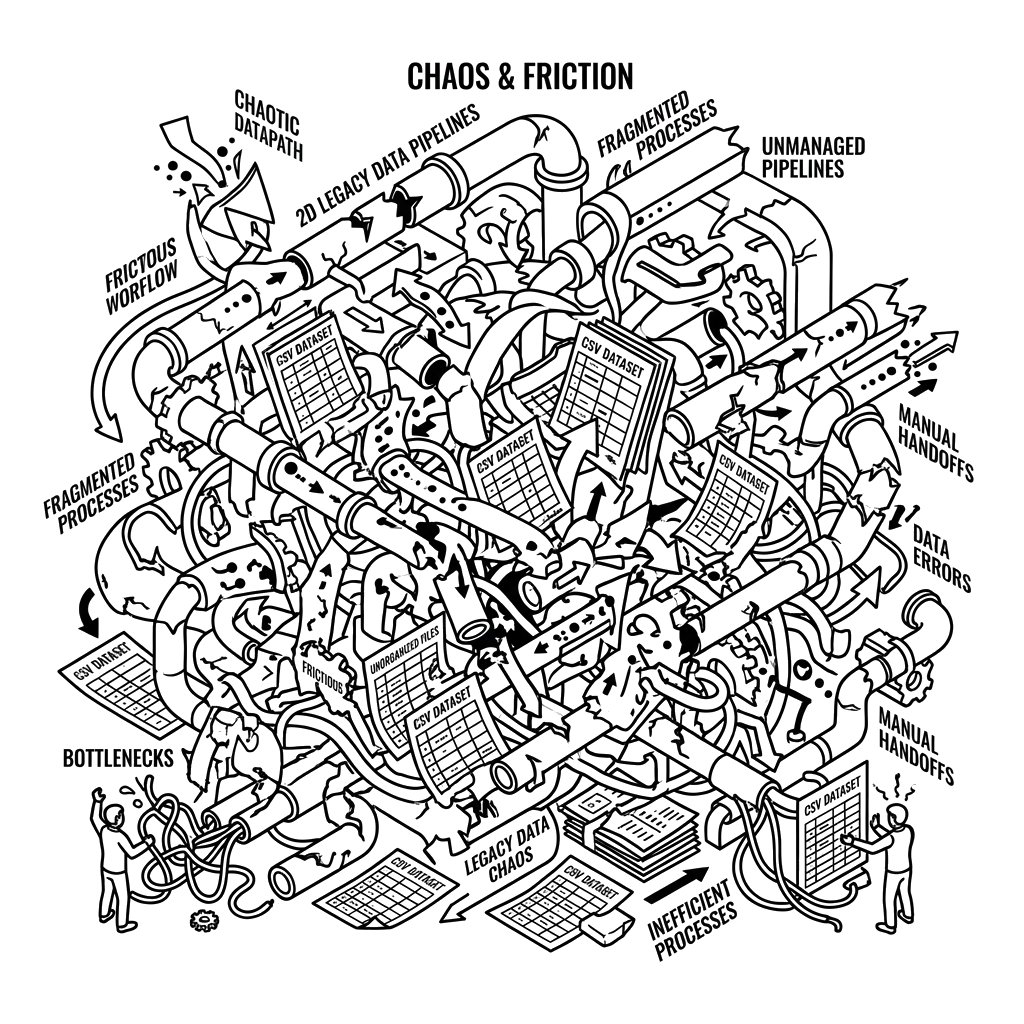
The 2D Spreadsheet Trap
The problem isn't that you don't know how to build a good model. The problem is that spreadsheets are fundamentally flat, two-dimensional structures. They represent data in rows and columns.
When you try to map a multi-variable business scenario across multiple business units, currencies, products, and months, you are trying to force a multidimensional reality into a 2D grid. To make it work, you have to link tabs to tabs, and workbooks to workbooks.
Every link is a potential fracture. The moment you change a driver in the shipping tab, the formula in the margin sheet breaks because someone inserted a new row. The currency translation rule gets overwritten because of a manual copy-paste mistake.

More importantly, flat sheets cannot process concurrent, multi-variable changes in real time. If you want to see the combined impact of shipping costs, launch delays, and currency fluctuations, a spreadsheet has to run thousands of sequential cell updates. It slows down, it crashes, and you end up guessing.
True scenario planning isn't about duplicating tabs and choosing three arbitrary numbers. It is about understanding how changes in one corner of your operations cascade through your entire business logic—instantly.
The Multidimensional Cube: How TM1 Works
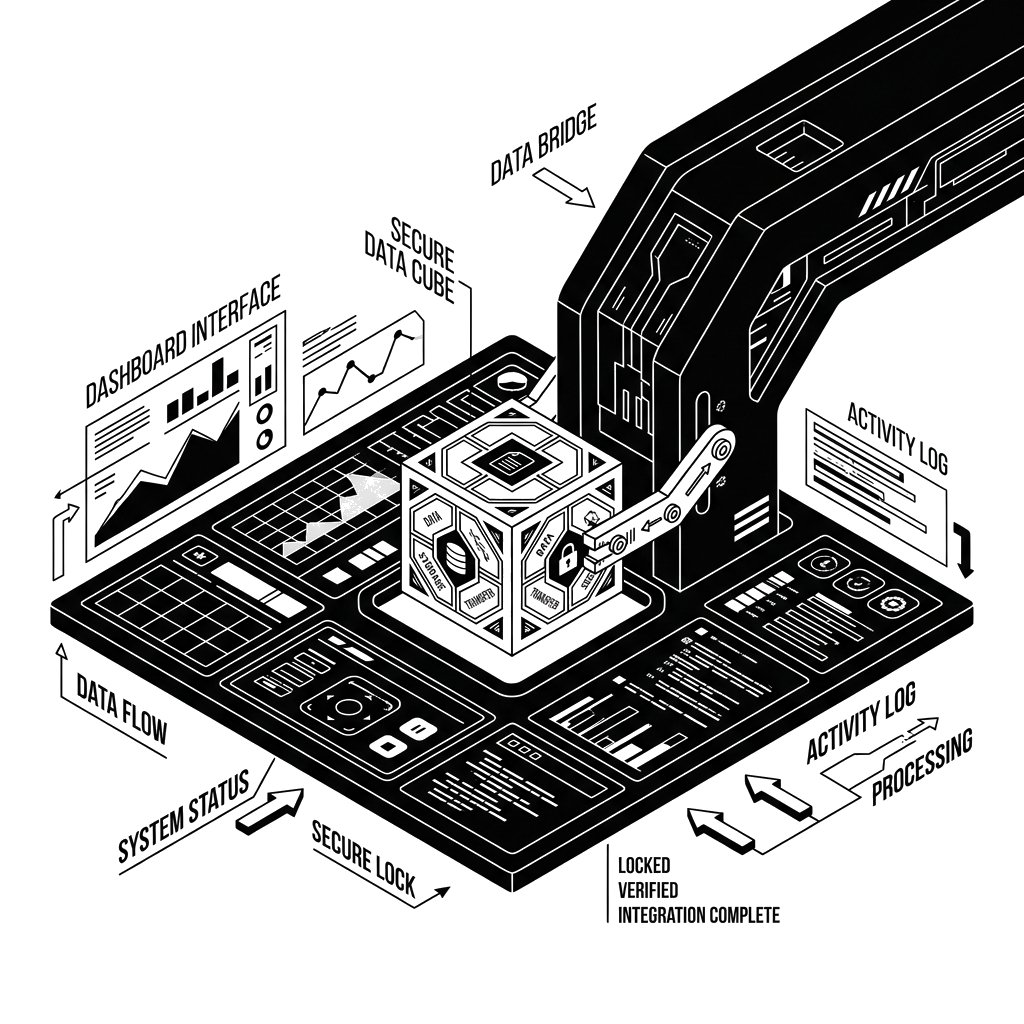
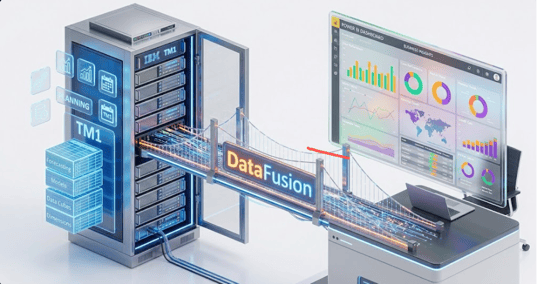
When you transition to IBM Planning Analytics (TM1), you throw out the concept of flat sheets entirely. Instead, your business logic is stored in multidimensional cubes.
Think of a cube as a database where every cell is defined by a coordinate across several dimensions. A single cell isn't just "B14." It is defined by a combination of dimensions:
- • Year: 2026
- • Month: October
- • Product: Component X
- • Region: APAC
- • Version: Scenario A
- • Measure: Gross Margin

Because the database is in-memory and multidimensional, a calculation rules engine runs across all dimensions simultaneously. If you adjust the APAC shipping cost driver, the system doesn't recalculate cell-by-cell in a linear sequence. It recalculates the entire database structure across all coordinates in real time.
This means you can run a scenario with fifty different operational variables and see the exact net profit impact across every product line in seconds, not hours.
You don't copy-paste tabs. You simply write to a new "Version" dimension. The underlying business logic—the allocation rules, the tax rates, the currency translations—remains identical and governed. You aren't rebuilding the model; you are simply viewing the same model under a different set of assumptions.
Tired of waiting two minutes every time you click recalculate?
Finance needs numbers right away, not after another walk to the breakroom. A few messy feeders or chunky dimensions usually drag everything down. Let us jump on a quick screen share, find the bottleneck, and get your speed back.
Speed up my cubesSpeed Over Hype
Let's cut through the standard marketing noise. We aren't suggesting that TM1 possesses a crystal ball that predicts the future. A software system cannot foresee a supply chain crisis or a sudden currency shift.
What it does is remove the latency of calculation.
When Fiji Airways had to map their operational recovery during the pandemic, they didn't need a system that guessed when flights would resume. They needed a system that could model 60 different "what-if" scenarios simultaneously—matching fuel costs, crew schedules, and route revenues on the fly. They did it using Planning Analytics because the multidimensional engine could process those 60 variations in minutes.
The value isn't in the prediction; the value is in the agility.
If it takes your team three days to build a scenario, you will only run three scenarios a year. If it takes fifteen minutes, you will run them every Tuesday afternoon. You stop guessing, and you start steering.
It is 6:00 PM on a Tuesday, and your CEO wants to see three different versions of next year's operational forecast before tomorrow's board meeting. Specifically, they need to know: what happens if APAC shipping costs go up 8%, the European sub-assembly plant delays its startup by two months, and the AUD drops to 0.64 against the USD—all at the same time. If you are running your finance operation on spreadsheet models, your night is already ruined. Here is what you will actually do: you will duplicate your master budget tab three times. You will rename them "High Case," "Base Case," and "Low ...
.webp)