.webp) 0
0
.webp) 16 September 2026, 12:57:56 pm AEST
16 September 2026, 12:57:56 pm AEST
.webp) 8 min
8 min
Contents
- How to Create Dynamic Parameters for TM1
- How to Build a Scorecard using TM1 Architect
- How to Enhance TM1 Security on a 'Need to Know' Basis
- How to Use Stargate Views for TM1 Cube Viewer
How to Create Dynamic Parameters for TM1
The CheckFeedersMaximumCells is a dynamic parameter that allows users to restrict and control performing check feeders operation in a cube for a selected number of cells. As per the documentation, the default value is 3,000,000, meaning feeders for consolidation with up to 3 million intersections could be checked against, by default.
Case in point: I’ve added the CheckFeedersMaximumCells parameter in tm1s.cfg file and set the value to 1, implying that the Check Feeders should only apply to not more than 1 cell.
CheckFeedersMaximumCells =1
Post the change, let’s look at real life results of adding this parameter:
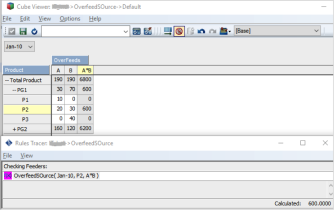
In the above screenshot, I’ve performed a Check Feeder operation on one cell and it aptly shows the result.
However, if I were to do the same on a consolidation, “PG1”, it throws an error as illustrated in the screenshot below.
.jpg?width=334&height=341&name=dynamic%20parameters%201%20(1).jpg)
Note 1: If the intersections or parameter value exceeds 99, the number format is displayed in scientific notion.
Note 2: If you would like to effectively disable checking feeders for whatever reason, you can do so by assigning -1 value for the config parameter.
How to Build a Scorecard using TM1 Architect
Cube used: Sales_Plan
Dimensions: Subsidiaries, Channel, Product, Month, Versions and Sales_Plan_Measures
To Add Traffic Lights in TM1 Architect follow the steps:
1. Enhance the Metrics Dimension
A Metric Dimension contains your collection of important measures or key performance indicators (KPI) that you want to monitor in your business.
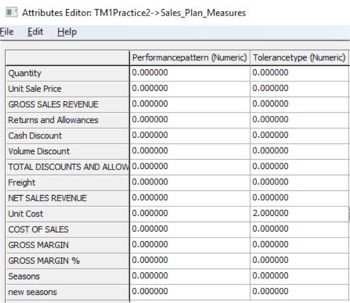
- Add 2 Attributes (Numeric) in ‘Sales_Plan_Measures’ Dimension namely ‘Performancepattern’ and ‘Tolerancetype’.
- Enter a value of 2 for ‘Unit Cost’ element in ‘Tolerancetype’ Attribute and let rest of the elements be 0.
2. Enhance the indicator dimension
Scorecarding, a Metric indicators dimension provides more information about your key performance indicators (KPI) or metrics. Examples of metric indicators include Score, Status, and Trend.
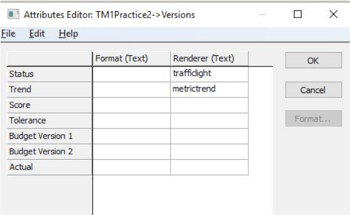
- Insert a New Attribute in ‘Versions’ Dimension and name it as ‘Renderer’.
- For Status member enter the ‘Renderer’ value as ‘trafficlight’.
- For Trend member enter the ‘Renderer’ value as ‘metrictrend’.
3. Enhance Time Dimension
- Enter a New Attribute in ‘Month’ Dimension and name it as ‘Previous’.
- Populate the ‘Previous’ Attribute with the invariant name of the preceding period from the level. (Example: For Feb enter ‘Jan’and so on).
How to Create a TM1 Security Overlay
Security Overlay is a type of cell security which restrict user’s ability to write to a cube, without causing change on the dimensions and without needing to change the underlying TM1 Security. Security Overlay prevent updates to cell data by all users, except Administrater.
Using Security Overlay Cube you can define the restriction to only selected dimensions of the Cube, as with Cell Security. Security Overlay does not apply to an Admin User, whereas the Cell Security can be applied to Admin including other users.
The Security Overlay cube is prefixed just like other Security Cubes.
} SecurityOverlayGlobal_CubeName
Security Overlay cube contains all the mapped dimensions from the cube and the last dimension is the ‘}SecurityOverlay Dimension’.
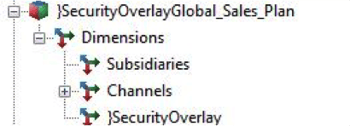
}SecurityOverlay dimension defines the data stored in the Overlay cube. It contains a single string element called ‘OverlayData’, which stores the data that is used to implement the Overlay. In OverlayData value ‘1’ must be entered to restrict write access in all intersections corresponding to the dimensions in Security Overlay cube.
To create Security Overlay cube via TI, use ‘SecurityOverlayCreateGlobalDefault’ function must be used.
This function can be called either in metadata or prolog tab as the functions that updates or create security must not be used in Data or Epilog tabs
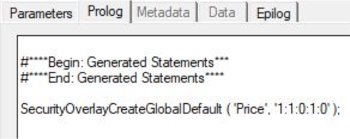
As per the above screenshot the price refers to the cube name. There are 5 dimension in the Price cube. Number ‘1’ indicates that the dimension is included in the Security Overlay cube and ‘0’ indicate the dimension is excluded.
As per the TI function in above screenshot it creates a Security Overlay cube with 1st, 2nd and 4th Dimensions.
Below is the screenshot of the Security Overlay Cube View
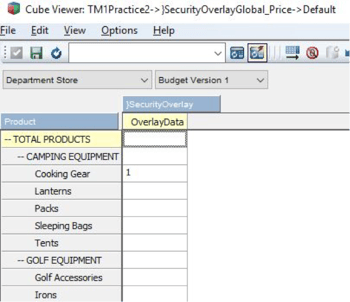
As per the above screenshot populated value 1 is entered in the intersection of ‘Department Store’, ‘Budget Version 1’ and ‘Cooking Gear’ which results in giving read access for all the intersections that has ‘Department Store’, ‘Budget Version 1’ and ‘Cooking Gear’.
Below is the snapshot of how the Security Overlay Cube View looks like after applying Security Overlay to the other users
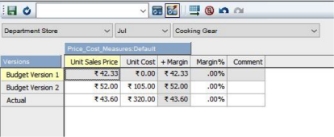
As per the above screenshot the intersection of Department Store, Cooking Gear and Budget Version 1 is not editable and all the other cells are editable.
The way Security Overlay Security diffrenciates from TM1 Cell Security is that TM1 Cell Security can be given different privileges like READ, WRITE, LOCK, NONE, RESERVE and ADMIN, whereas in Security Overlay Cube everyone is given READ access except the Admin. Cell Security can be given to all users including Admin.
There is no requirement to execute any process after u update the Overlay Security Cube and the impact of cell security comes into effect immediately. There will be no time lag or need of refreshing the security.
‘SecurityOverlayGlobalLockNode’ function must be used to restrict the access rights of a node to read-only by locking it.
Security Overlay Cube can be deleted or destroyed using a ‘SecurityOverlayDestroyGlobal’ Turbointegrator function.
To create Cell Security cube via TI, use ‘CellSecurityCubeCreate’ function must be used, similarly to ‘CellSecurityCubeDestroy’ function can be used to destroy Cell Security Cube.
How to Use Stargate Views For TM1 Cube Viewer
A Stargate View is a subsection of TM1 cube which is created by TM1 when you browse a cube with the Cube Viewer. It is also known as ‘View Cache’. Stargate View is different from a TM1 view object, and hence does not contain the formatting information and browser settings that are available in a view object.
Stargate View helps in accessing the cube data more rapidly than the TM1 object (Actual Cube View). Stargate View contains only the data for a defined section of a TM1 cube.
Stargate View contains only the data defined by the title elements and row and column subsets.
TM1 stores a Stargate view when you access a view that takes longer time to retrieve than the threshold defined by the VMT property in the }CubeProperties control cube. If a VMT value is not defined, a Stargate view will get generated when a view takes longer than five seconds. This is the default threshold when VMT is not specified in the }CubeProperties control cube.
A Stargate view persists in memory until the browser view from which it originates remains unchanged. If the view is changed and you recalculate the browser view, TM1 replaces the existing Stargate view in memory with the new one based on the recalculated view.
TM1 removes the Stargate View or Cache when you close the browser view and it will also be removed if you restart the TM1 Application.
TM1 provides some settings to control the Stargate View namely VMT (View Minimum Time) and VMM (View Maximum Memory), which can be seen in ‘}CubeProperties’ control cube.
VMM is expressed in KB. If we don’t specify any value, then a default value of 128 is used.
VMT is in seconds. If no value is specified, then a default value of 5 is used.
Try out our TM1 $99 training
Join our TM1 training session from the comfort of your home

If you are looking to advance your skills, consider our IBM Cognos TM1 Training or our comprehensive TM1 training for $59 per person.
Contents How to Create Dynamic Parameters for TM1 How to Build a Scorecard using TM1 Architect How to Enhance TM1 Security on a 'Need to Know' Basis How to Use Stargate Views for TM1 Cube Viewer How to Create Dynamic Parameters for TM1 The CheckFeedersMaximumCells is a dynamic parameter that allows users to restrict and control performing check feeders operation in a cube for a selected number of cells. As per the documentation, the default value is 3,000,000, meaning feeders for consolidation with up to 3 million intersections could be checked against, by default. Case in point: I’ve added ...
.webp)
.png)
.png?width=499&height=286&name=Agentic%20AI%20blog%20(1).png)

.gif?width=559&height=320&name=TM1%20newsletter%20(1).gif)

.png?width=567&height=302&name=fiji%20blog%20(1).png)


.png?width=426&height=323&name=social%20post%20(1440%20%C3%97%201080%20px).png)
.png?width=504&height=284&name=social%20post%20(3).png)
.png?width=520&height=293&name=social%20post%20(4).png)









-1.webp?width=499&height=336&name=business-intelligence-tools-Dec-26-2022-10-02-06-5%20(1)-1.webp)



.jpg?width=512&name=unnamed%20(1).jpg)