When your finance team spends more time wrestling with data than analysing it, your planning software is working against you. For enterprise transportation and fleet operations leaders, selecting the right planning analytics software directly affects everything from route optimisation decisions to fuel cost forecasting. This guide walks you through the evaluation criteria, integration requirements, and automation readiness factors that matter most when choosing a platform for IT-led financial planning.

The planning analytics market has matured significantly. According to Gartner Peer Insights, there are now over 75 financial planning software products competing for enterprise attention. Finding the right fit requires understanding your specific data integration needs, performance requirements, and long-term automation goals.
Key Takeaways: How to Choose Planning Analytics Software in 2026
- Integration capabilities with existing ERP and operational systems should be your first evaluation criterion when selecting planning analytics software.
- Automation readiness determines whether your investment will scale as your organisation adopts AI-driven forecasting and scenario planning.
- Octane delivers IBM Planning Analytics implementations that reduce planning cycles by up to 40% while improving data accuracy across enterprise systems.
- Multidimensional modelling capabilities separate enterprise-grade platforms from simpler budgeting tools that cannot handle complex operational data.
- Total cost of ownership includes licensing, implementation, training, and ongoing support when evaluating planning analytics software options.
What Is Planning Analytics Software and Why Does It Matter?
Planning analytics software unifies budgeting, forecasting, and financial analysis in a single platform. Unlike standalone budgeting tools, these systems connect operational data with financial metrics to give you a complete picture of business performance.
For transportation and fleet operations, this connection is critical. Your fuel costs, driver schedules, maintenance cycles, and route efficiency all feed into financial outcomes. A planning analytics platform pulls these data streams together so you can model scenarios accurately.
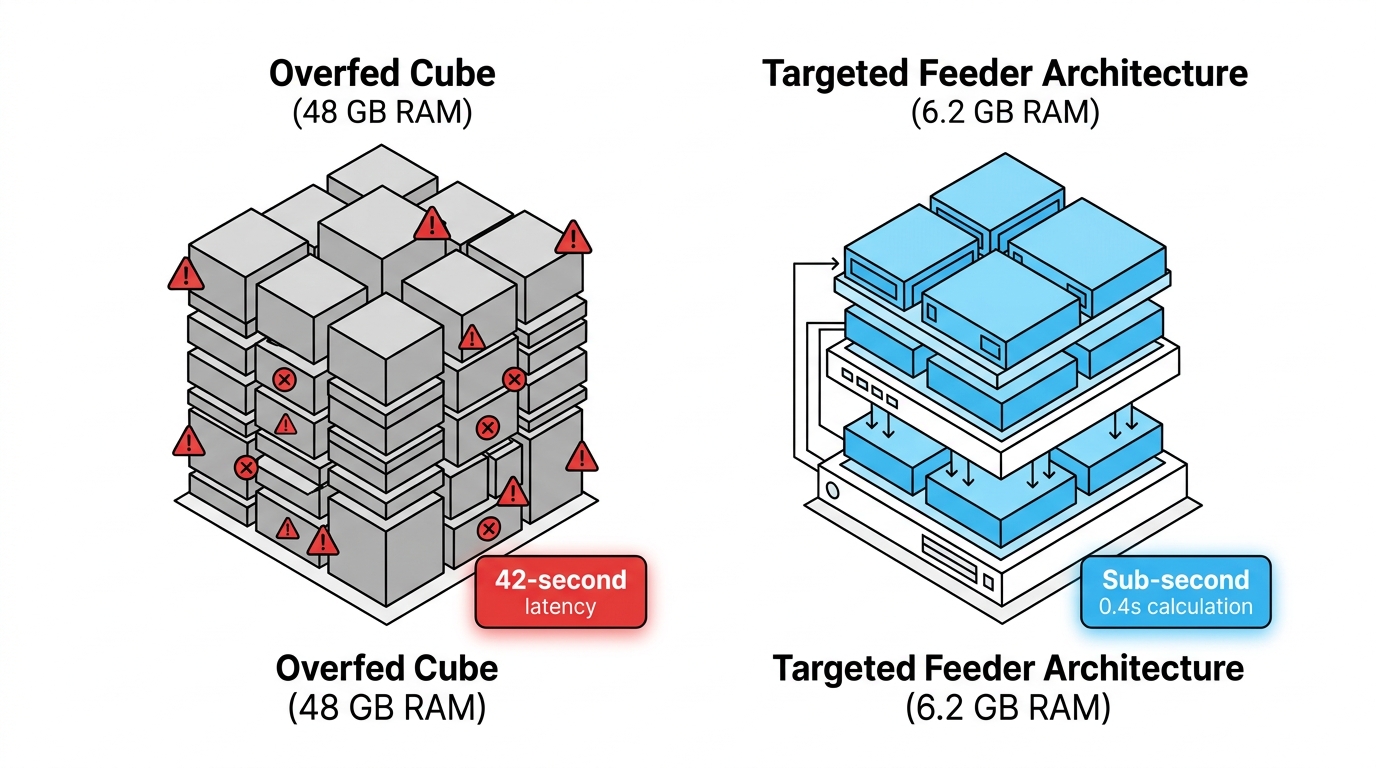
The core difference between basic spreadsheet-based planning and enterprise planning analytics lies in calculation speed and data governance. When you change an assumption in a proper planning engine, calculations propagate instantly across millions of data points. There is no waiting, no broken formulas, and no version control chaos.
How Do You Assess Integration Requirements for Planning Analytics?
Integration capability should be your starting point. The platform needs to connect to your existing data sources without requiring massive custom development work.
Start by mapping your current data landscape. Most enterprise transportation organisations have data scattered across ERP systems, fleet management platforms, fuel card networks, and driver scheduling applications. Your planning analytics software must pull from all these sources reliably.
What Data Sources Should Your Platform Connect To?
Look for native connectors to your core systems. Enterprise resource planning systems like SAP, Oracle, and Microsoft Dynamics are table stakes. Beyond ERP, you need connections to operational databases that hold your fleet telemetry, fuel consumption records, and maintenance histories.
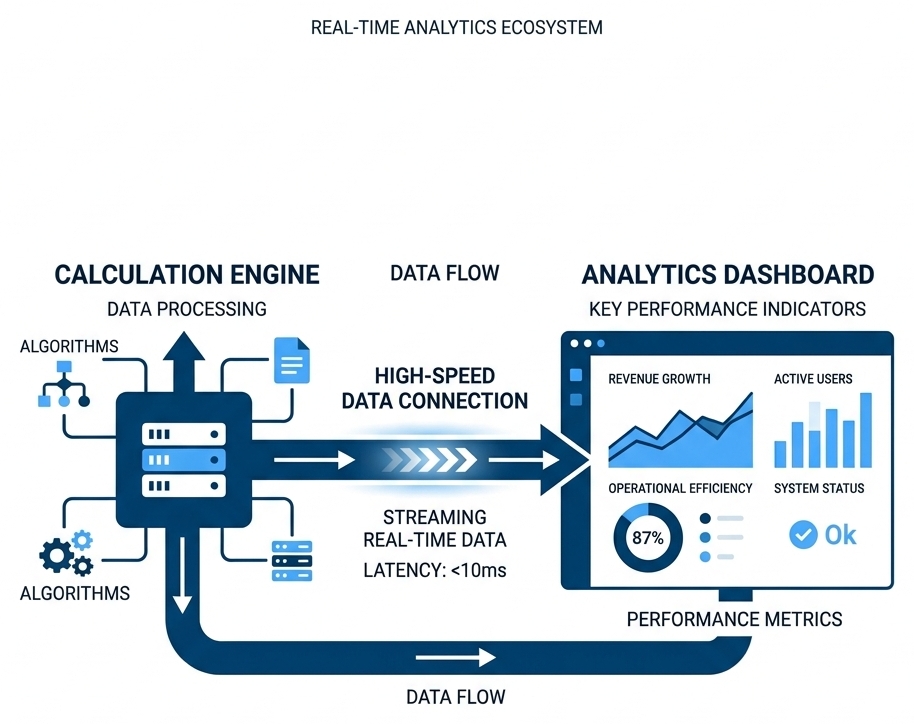
The best platforms offer both batch and real-time integration options. Batch processing works for historical analysis and monthly reporting. Real-time feeds become essential when you need up-to-the-minute visibility into operational performance.
How Important Is API Availability?
APIs determine your flexibility. A REST API allows your IT team to build custom integrations when pre-built connectors do not exist. This matters because every organisation has at least one critical system that falls outside the standard connector library.
Check the API documentation quality before committing. Well-documented APIs with active developer communities indicate a vendor that takes integration seriously. Poorly documented or deprecated APIs signal future headaches.
What Automation Capabilities Should You Prioritise?
Automation readiness separates platforms that will grow with your organisation from those that will become bottlenecks. The right platform handles routine tasks automatically while giving your team time for actual analysis.
Look for workflow automation that manages the planning cycle itself. Budget collection, approval routing, and consolidation steps should run without manual intervention once configured. This removes the administrative burden that consumes so much time during peak planning periods.
How Does AI Fit Into Planning Analytics?
AI-augmented forecasting has moved from experimental feature to practical capability. The leading platforms now offer predictive models that analyse historical patterns and generate baseline forecasts automatically.
For fleet operations, this means AI can predict maintenance costs based on vehicle age and usage patterns. It can forecast fuel expenses by incorporating route data and market price trends. These predictions give you a starting point that your team refines rather than builds from scratch.
Octane helps organisations connect agentic AI capabilities with their planning analytics environment. This integration allows AI agents to automate variance analysis, generate commentary, and surface insights without manual intervention.
What Level of Automation Can You Expect?
Be realistic about automation timelines. Most organisations start with basic workflow automation and progress toward AI-driven forecasting over several planning cycles. Attempting full automation from day one usually fails because the data foundation is not ready.
Plan for incremental automation. Automate data loading first. Then move to calculation automation. Finally, introduce predictive models once your historical data is clean and your business rules are documented.
How Do You Evaluate Multidimensional Modelling Capabilities?
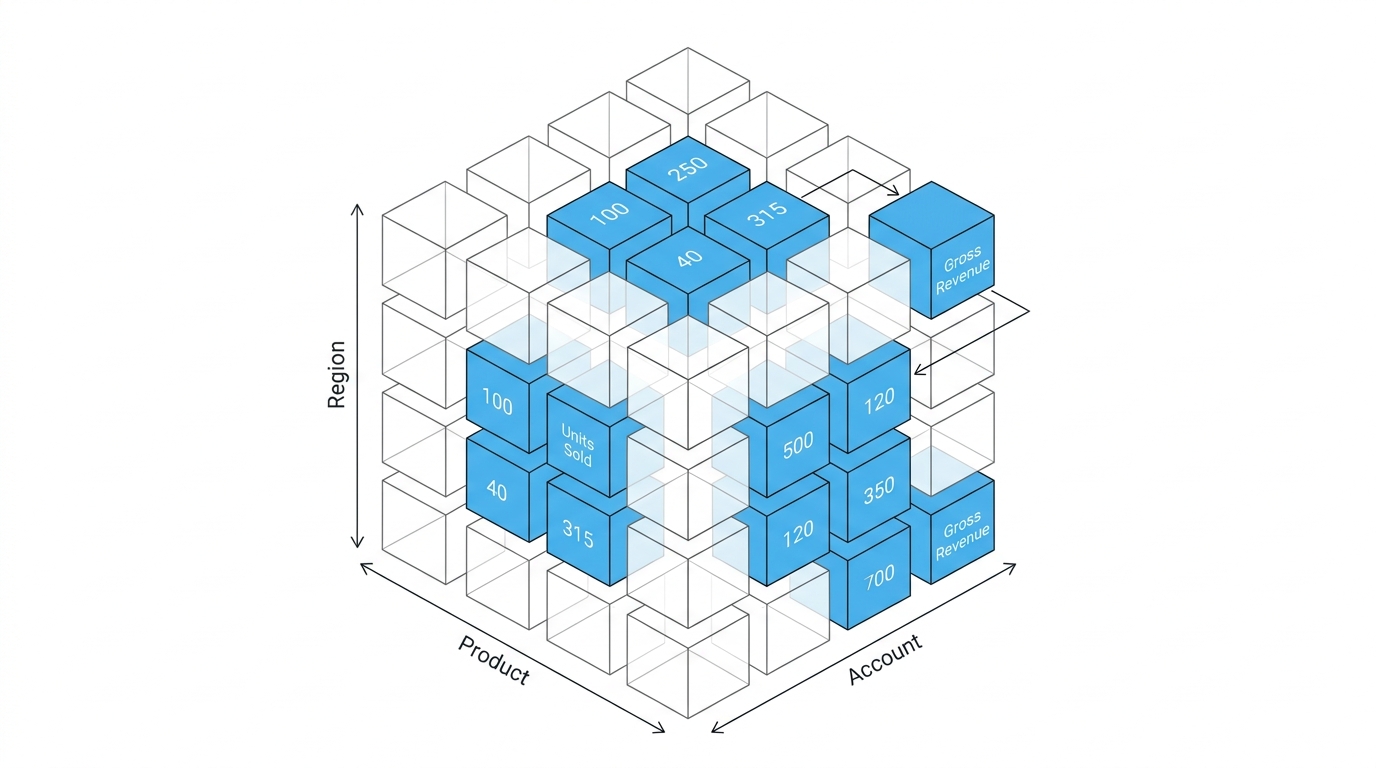
Multidimensional modelling is what makes enterprise planning analytics different from spreadsheets. The ability to slice data across multiple dimensions simultaneously enables analysis that spreadsheets simply cannot handle.
Think about how you analyse fleet performance. You might want to see fuel costs by vehicle type, by region, by month, by driver, and by route category all at once. A multidimensional engine handles this naturally. Spreadsheets require complex pivot tables, multiple tabs, and careful formula management that breaks under real-world complexity.
What Dimensions Matter for Transportation and Fleet Operations?
Common dimensions for fleet operations include vehicle, depot, region, time period, cost category, and scenario. More sophisticated models add dimensions for route type, customer segment, and maintenance category.
The number of dimensions your platform supports matters less than how it handles them. Some platforms slow dramatically as dimension count increases. Others maintain performance through optimised calculation engines and intelligent caching.
How Fast Should Calculations Run?
Speed expectations have increased dramatically. Modern platforms should recalculate complex models in seconds, not minutes. When your CFO asks a "what if" question in a meeting, you should be able to answer it before the meeting ends.
Test calculation speed with realistic data volumes during your evaluation. Vendor demonstrations often use small sample datasets that perform well regardless of underlying architecture. Load your actual data and run your actual calculations to see true performance.
What Security and Governance Features Are Essential?
Enterprise planning systems contain sensitive financial data. Security and governance capabilities must match your organisation's requirements and regulatory obligations.
Start with user authentication. Integration with your identity provider through SAML or OAuth reduces administrative overhead and ensures consistent access controls. Avoid platforms that require separate user management from your corporate directory.
How Granular Should Data Access Controls Be?
Role-based access control is baseline. Look for the ability to restrict access at the intersection of multiple dimensions. A regional manager should see only their region's data. A cost category owner should see only their cost categories. The platform should enforce these restrictions without requiring complex workarounds.
Audit logging matters for compliance. Every data change, every calculation run, and every export should be logged with user attribution and timestamp. This trail becomes essential when auditors ask questions about data lineage.
What About Data Residency Requirements?
Cloud deployment has become standard, but data residency requirements vary by industry and geography. Confirm that your shortlisted vendors offer deployment options that satisfy your compliance obligations.
For Australian organisations, data sovereignty often requires hosting within Australian data centres. Enterprise considerations around data location, privacy legislation, and regulatory oversight should drive deployment decisions.
How Should You Approach Vendor Evaluation?
Vendor evaluation requires structured comparison across multiple criteria. Resist the temptation to select based on demonstrations alone. Demonstrations show what vendors want you to see, not necessarily what you need to know.
Build a weighted scoring matrix that reflects your priorities. If integration is your biggest challenge, weight integration criteria heavily. If you have clean data but lack analytical capability, weight the modelling and analysis features more heavily.
What Questions Should You Ask During Demonstrations?
Ask vendors to demonstrate using your data and your scenarios. Generic demos tell you little about how the platform will perform in your environment. Provide sample data and specific use cases before the demonstration.
Request customer references in similar industries. A vendor with transportation and logistics customers understands your challenges differently than one whose experience is purely in financial services or manufacturing.
How Do You Assess Implementation Partners?
The implementation partner often matters more than the software vendor. Complex planning systems require configuration, integration work, and change management that the software vendor rarely handles directly.
Evaluate implementation partners on their track record with your chosen platform, their understanding of your industry, and their approach to knowledge transfer. You want a partner who builds your team's capability rather than creating permanent dependency.
Octane brings deep IBM Planning Analytics expertise to implementation engagements. Their team of IBM Champions has delivered solutions for Fortune 500 companies and mid-market organisations across transportation, logistics, and enterprise finance.
What Total Cost of Ownership Factors Should You Consider?
Software licensing is just the beginning. Total cost of ownership includes implementation, training, ongoing support, and internal resource requirements. Many organisations underestimate these costs and end up with budget overruns or underutilised platforms.
How Are Licensing Models Changing?
Subscription licensing has largely replaced perpetual licensing. This shifts the financial model from capital expenditure to operating expenditure and reduces upfront investment requirements.
Understand what your subscription includes. Some vendors bundle support and maintenance into the subscription. Others charge separately for premium support tiers, additional users, or increased processing capacity.
What Internal Resources Will You Need?
Every planning analytics implementation requires internal resources. At minimum, you need a technical owner who understands the platform architecture and a business owner who drives adoption among users.
Larger implementations require dedicated administrators, report developers, and change management resources. Budget for these roles from the start rather than discovering the need after go-live.
How Do You Build a Business Case for Planning Analytics?
Executive approval requires a compelling business case. Quantify the current costs of your planning process and the expected benefits of the new platform.
Current state costs include staff time spent on manual data consolidation, error correction, and report generation. They also include the opportunity cost of delayed decisions due to slow planning cycles.
What Benefits Can You Quantify?
Time savings are the easiest benefit to quantify. If your current planning cycle takes 15 business days and the new platform reduces that to 8 days, you can calculate the value of those recovered person-days.
Accuracy improvements are harder to quantify but often more valuable. Better forecasts lead to better capital allocation, reduced working capital requirements, and fewer emergency procurement situations. Work with your finance team to estimate the value of these improvements.
How Long Should Implementation Take?
Implementation timelines vary based on complexity. A basic deployment with standard integrations might take 8 to 12 weeks. Complex implementations with custom integrations, data migration, and extensive user training can take 6 months or longer.
Phased implementations reduce risk. Start with core budgeting and forecasting functionality. Add advanced analytics and automation in subsequent phases once the foundation is stable.
What Common Mistakes Should You Avoid?
Several patterns consistently lead to failed planning analytics implementations. Recognising these patterns early helps you avoid them.
Why Do Feature Overload Projects Fail?
Attempting to implement every feature simultaneously overwhelms users and stretches project resources thin. Focus on the capabilities that deliver immediate value. Add advanced features after users are comfortable with the basics.
What Happens When You Skip Change Management?
The best planning platform fails if people refuse to use it. Change management requires communication, training, and support throughout the implementation and beyond. Budget for ongoing user enablement rather than treating training as a one-time event.
Why Is Data Quality Often Overlooked?
Garbage in, garbage out applies to planning analytics just as it applies to any data system. Address data quality issues before implementation begins. The planning platform cannot fix inconsistent coding, missing records, or incorrect hierarchies in your source systems.
How Do You Ensure Long-Term Success?
Selection is just the first step. Long-term success requires ongoing attention to user adoption, system maintenance, and capability development.
What Governance Structure Do You Need?
Establish clear ownership for the planning platform. Define who approves changes to models, who maintains master data, and who responds when users have questions. Without clear governance, platforms drift toward inconsistency and underuse.
How Do You Measure Success?
Define success metrics before implementation begins. Typical metrics include planning cycle time, forecast accuracy, user adoption rates, and business stakeholder satisfaction. Track these metrics consistently and use them to guide ongoing improvement efforts.
Regular reviews with your implementation partner keep the platform aligned with evolving business needs. As your organisation changes, your planning models and processes need to change with it.
Conclusion: Making the Right Choice for Your Organisation
Choosing planning analytics software is a significant decision that affects finance operations for years. By focusing on integration requirements, automation readiness, and multidimensional modelling capabilities, you can identify platforms that match your specific needs.
Take the time to evaluate thoroughly. Involve both technical and business stakeholders in the decision. Build a realistic business case and plan for the full total cost of ownership.
The right platform, implemented well, transforms planning from a quarterly burden into a continuous competitive advantage. The wrong choice or poor implementation creates frustration and wastes investment. Make your evaluation count.
FAQs about How to Choose Planning Analytics Software in 2026
What is the difference between planning analytics and business intelligence software?
Planning analytics software focuses on forward-looking activities like budgeting, forecasting, and scenario modelling. Business intelligence primarily analyses historical data to understand what happened. Octane helps organisations connect both capabilities through integrated IBM Planning Analytics implementations that support both historical analysis and predictive planning.
How long does a typical planning analytics implementation take?
Implementation timelines range from 8 weeks for basic deployments to 6 months or more for complex enterprise implementations. The duration depends on integration complexity, data migration requirements, and the extent of user training needed. Octane delivers IBM Planning Analytics implementations with accelerated timelines based on proven methodologies.
What should I budget for planning analytics software?
Budget considerations should include software licensing, implementation services, training, and ongoing support. Total first-year costs typically range from $150,000 to $500,000 for mid-market organisations, with enterprise implementations potentially exceeding $1 million depending on scope and complexity.
Can planning analytics software integrate with my existing ERP system?
Modern planning analytics platforms offer native connectors for major ERP systems including SAP, Oracle, and Microsoft Dynamics. Octane specialises in connecting IBM Planning Analytics with enterprise data sources, ensuring your planning platform has access to accurate operational and financial data.
How does AI improve planning analytics?
AI enhances planning analytics through automated baseline forecasting, anomaly detection, and variance analysis. These capabilities reduce manual effort and improve forecast accuracy. Octane integrates AI agents with IBM Planning Analytics through watsonx Orchestrate, enabling autonomous workflows that accelerate planning cycles.
What training do users need for planning analytics software?
Training requirements vary by user role. Power users who build models need extensive technical training. Business users who consume reports and enter budget data need focused training on their specific tasks. Octane provides role-based training programmes that ensure each user group develops appropriate skills for their responsibilities.
Talk to us and see IBM Planning Analytics first hand together with your team. Talk to us!
When your finance team spends more time wrestling with data than analysing it, your planning software is working against you. For enterprise transportation and fleet operations leaders, selecting the right planning analytics software directly affects everything from route optimisation decisions to fuel cost forecasting. This guide walks you through the evaluation criteria, integration requirements, and automation readiness factors that matter most when choosing a platform for IT-led financial planning. The planning analytics market has matured significantly. According to Gartner Peer ...
.png)
.webp) 0
0
.webp) 31 August 2026, 10:37:55 am AEST
31 August 2026, 10:37:55 am AEST
.webp) 11 min
11 min
.webp)
.png)


.jpg?width=540&height=408&name=Image%20(47).jpg)
.jpg?width=498&height=376&name=Media%20(80).jpg)
.jpg?width=513&height=388&name=Image%20(46).jpg)



.png)
.png)